Rules controversies shouldn't be the main talking point.
March 19, 2026 by Patrick Aubyrn in Opinion
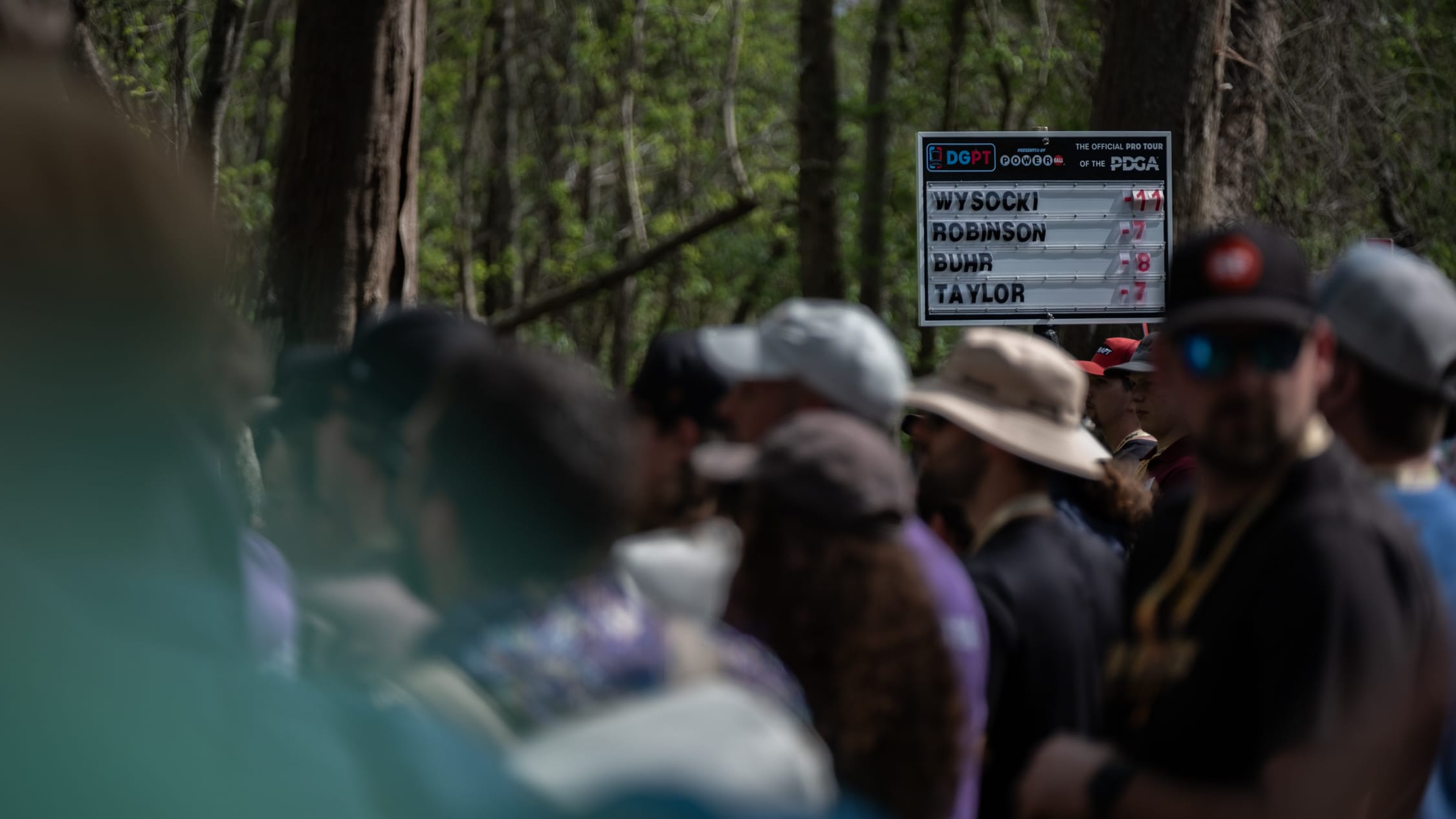
Rules enforcement, or the lack thereof, cannot be allowed to overshadow competitive professional play at Disc Golf Pro Tour events. Unfortunately, this is exactly what happened at the conclusion of the Big Easy Open. The post-tournament discourse has been dominated by discussion around Ricky Wysocki clearing debris that may have been in front of his lie and getting the correct spot for Wysocki’s fourth shot after finding out of bounds in the playoff. It’s a shame, because the tournament featured some truly compelling golf, especially down the stretch.
Moments like these should catalyze change: the Pro Tour should act immediately to begin a transition away from self-officiating and toward more rules enforcement by marshals.
Presently, the DGPT does not have the ability to station a marshal on every hole of the course, and I don’t believe they will ever have the capacity to assign one marshal per card. These are high standards with real monetary and manpower limitations. However, as this past weekend demonstrates, perfect cannot be the enemy of good, and changes to on-course officiating are past due. Rule changes alone will not resolve rules enforcement issues.
To meet the moment, the DGPT should institute a four-person officiating team at all Pro Tour events, assigning one official to each of the top four cards. Staffing this team would be relatively straightforward, leveraging existing DGPT and tournament staff. First, the Pro Tour would provide one marshal for every event. DGPT CEO Jeff Spring is the obvious choice, as he is already salaried and at the Pro Tour events. The Tournament Director should be the second marshal.1
The local organizers would provide the final two marshals, preferably filling the roles with people who know the course well. Make this a requirement to host a Pro Tour event, the same as setting a minimum added cash for the payout. If the tournament hosts cannot provide two marshals, they cannot host a DGPT event. Marshals with deep course knowledge benefit the tour because they can anticipate where and when rules enforcement is most likely during a round. These marshals can debrief officials who are less familiar with the course. Seeing as most events on tour are repeated year over year, one would assume that tournament staffs have a good foundation to recruit quality personnel to fill these roles.
There will understandably be concerns about fairness if only four cards are under observation, but it is in the Pro Tour’s best interest to ensure rules integrity on the cards most likely to appear on coverage. Additionally, consistent rules enforcement for the top four cards could have a positive trickle down effect. When players know that contenders will be under increased scrutiny, they model their game to be in the contender class. Frankly, having a marshal on your card should also provide some sense of relief. When marshals are deputized to make certain calls without player input, it allows players to focus on playing their own game rather than policing their cardmates, an increasingly difficult challenge for professional players who are already thinking about their next shot and potentially on the opposite side of the fairway (as, say, Isaac Robinson was when he didn’t see Wysocki move the branches ahead of his lie).
All of this is moot, of course, if the rules aren’t enforced consistently by the marshals. I suggest picking the low-hanging fruit first. Some rules are easier to enforce than others, like clearing a lie, establishing a legal stance, and taking excessive time. If the DGPT chose to focus on these three rules as areas for emphasis, they would instruct Marshals to actively observe players clearing debris from their lie or assuming an awkward stance. Similarly, the DGPT should instruct players to request a marshal when removing non-trivial debris or to confirm a legal stance. Empower both parties to engage with each other proactively and work cooperatively. When it comes to time violations, begin by enforcing excessive time on tee shots and unobstructed C1 putts. These are practiced shots, after all, and everyone on the card will be in relatively close proximity, which allows the marshal to easily observe all players. Ultimately, a marshal’s top priority should be preventing infractions, and their second priority should be issuing rulings when violations occur. (To their credit, marshals called time extensions on both Gannon Buhr and Luke Taylor during the final round).
The DGPT would need to set expectations before implementing this type of change. Email all tour card holders before the changes go into effect so that they know the marshals will be emphasizing specific rules. Reiterate these areas of emphasis to players in pre-tournament materials, and have the marshals remind players on their cards of these emphases before the rounds begin. The goal is to establish a system that is collegial, not confrontational, and in keeping with the spirit of the game.
Implementing small officiating crews now will establish a foundation for the expansion of crews at a later date without creating an undue burden in the present. The DGPT could pursue an aggressive timeline for this change, aiming for the second half of the US tour following the European swing, or they could communicate the change for the 2027 season to give tournament teams more time to prepare. And by choosing a select few rules to enforce consistently, the tour would ease its way into an enforcement model and create an environment for better rules enforcement overall.
On the occasions when Jeff Spring is filling both roles, CEO and TD, the DGPT must find a second marshal to fill the TD spot on the officiating team. ↩